

A booster pump system lifts or holds water pressure where the incoming supply is too weak, such as on the upper floors of a building or at the far end of a plant. Getting the size right is the difference between steady pressure and a system that hunts, trips or wastes power. This guide walks through the numbers you need.
Step 1: work out the peak flow
Peak flow is the most water that will be drawn at one time, not the daily total. For a building, count the fixtures or flats and apply a simultaneity factor, because they are never all open together. For a plant, add up the process demand at the busiest moment and allow a small margin for growth.
Write the figure in m³/h. If you only know litres per minute, divide by 16.7 to convert.
Step 2: calculate the total head
Total head is the pressure the pump must add, expressed in metres of water. Add three things: the static height from the pump to the highest outlet, the pressure you need at that outlet (about 10 m for 1 bar), and the friction loss in the pipes and fittings. Subtract any pressure already available at the pump inlet.
A common mistake is to ignore pipe friction. Long runs or small pipes can add several metres, so measure or estimate them honestly.

Step 3: choose the number of pumps
One large pump is the cheapest to buy, but it leaves you with no water if it fails and runs inefficiently at low demand. Two or three smaller pumps share the load, switch on as demand rises and give you a standby. Many buildings use two duty pumps plus one standby, each sized for part of the peak.
For critical supplies such as hospitals and process plants, specify at least N+1: enough pumps to meet peak demand with one unit out of service.
Step 4: decide how pressure is controlled
- Pressure switch and tank – simple and low cost for small systems, but pressure swings between cut-in and cut-out.
- Variable-speed (VFD) control – the pump speed follows demand, holding a constant pressure and saving energy at part load.
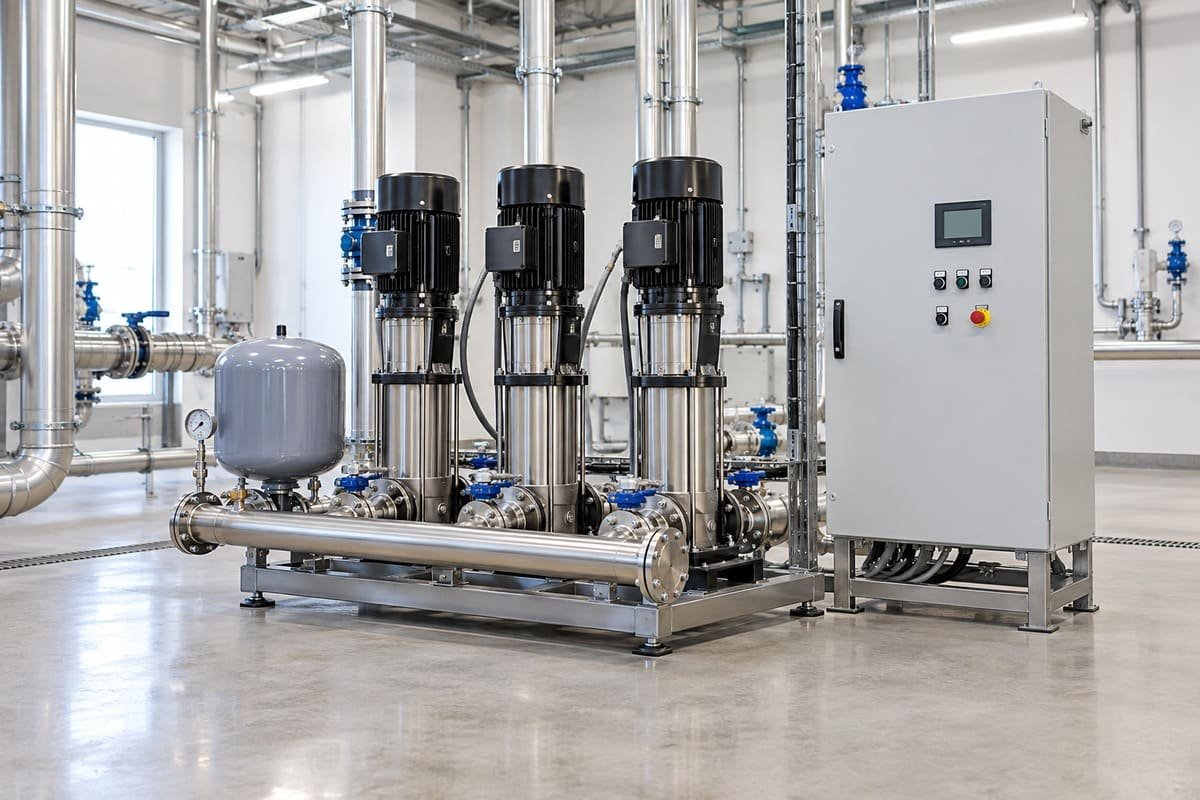
CNP's CHME constant-pressure sets come with the frequency controller, pressure sensor, check valve, gauge and tank, so the unit arrives ready to connect. The TDE range puts the controller on the pump itself.
Step 5: check the details that cause trouble
Confirm the inlet conditions so the pump does not cavitate, size the pressure tank to limit starts per hour, and fit non-return valves and isolating valves on each pump. Check that the maximum system pressure stays below the pump and pipe rating.
Frequently asked questions
How much head does a booster pump need for a six-storey building?
Allow about 3 m per floor for the static height, plus around 20 to 30 m for the outlet pressure and pipe friction, then adjust for your actual layout. Always calculate rather than guess.
Is a variable-speed booster worth it?
If demand varies through the day, yes. Variable speed holds a steady pressure and reduces the power used at part load, so it often repays its extra cost.
What size pressure tank do I need?
Size it to the pump flow and the number of starts per hour you can accept. Your supplier or our engineers can calculate it from the duty.
Talk to CNP Pumps Pakistan
See the CHME constant-pressure sets or use the Pump Finder to shortlist pumps for your flow and head.


Comments
No comments yet. Be the first to write one.