

With thousands of models on the market, choosing a pump can feel hard. In practice, seven questions decide almost everything. Answer them first and the choice narrows to a short list.
1. What liquid are you pumping?
Clean water, wastewater, chemicals, hot water and seawater all need different materials and designs. Note the liquid, its concentration and whether it contains solids, fibres or gas.
2. How much flow do you need?
Flow is the volume per unit time, in m³/h or L/s. Use the peak demand, not the daily average, and avoid adding large safety margins that push you to an oversized pump.

3. What head must the pump produce?
Total head is the lift, the pressure required at the outlet and the friction losses in the pipes, all in metres. It is the single most important number after flow.
4. What is the liquid temperature?
Temperature affects seals, materials and NPSH. Hot water needs hot-water designs and careful suction conditions.
5. What power supply do you have?
Check the voltage, the number of phases and the frequency: 50 Hz or 60 Hz. Pump curves differ between the two, so choose the data for your supply.
6. How much space and what layout?
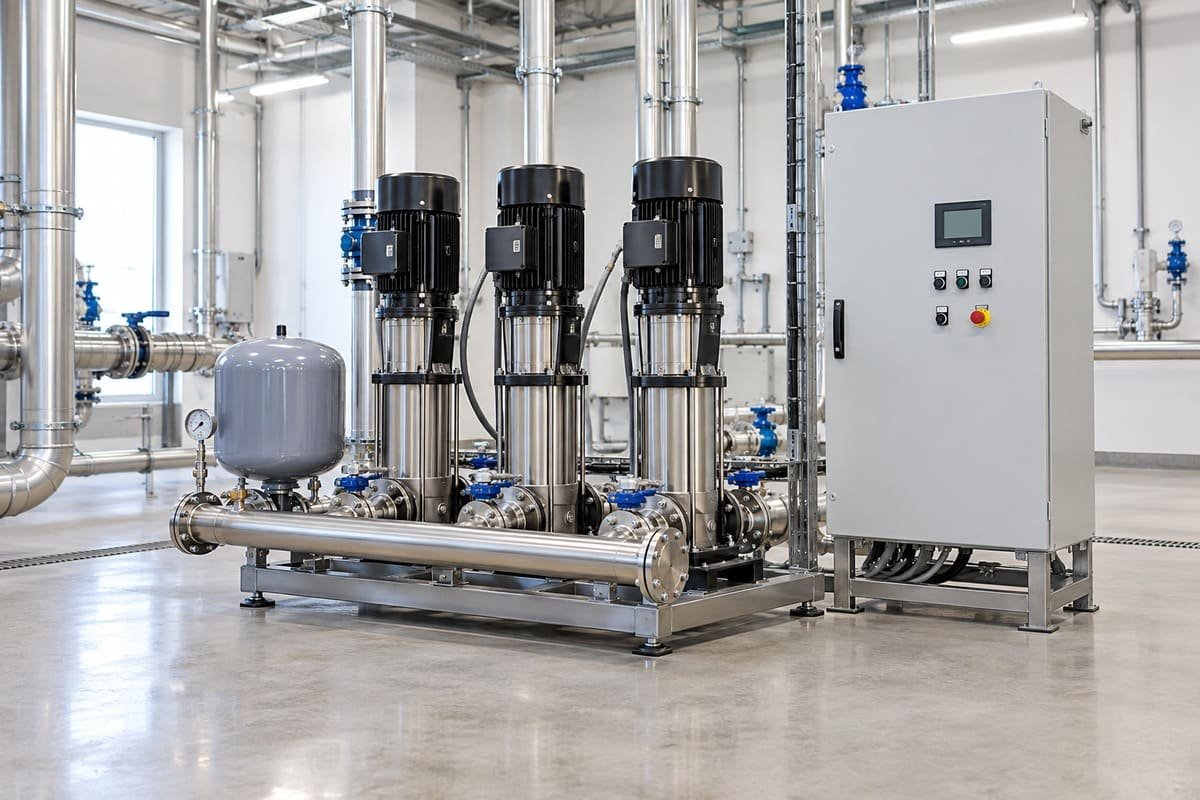
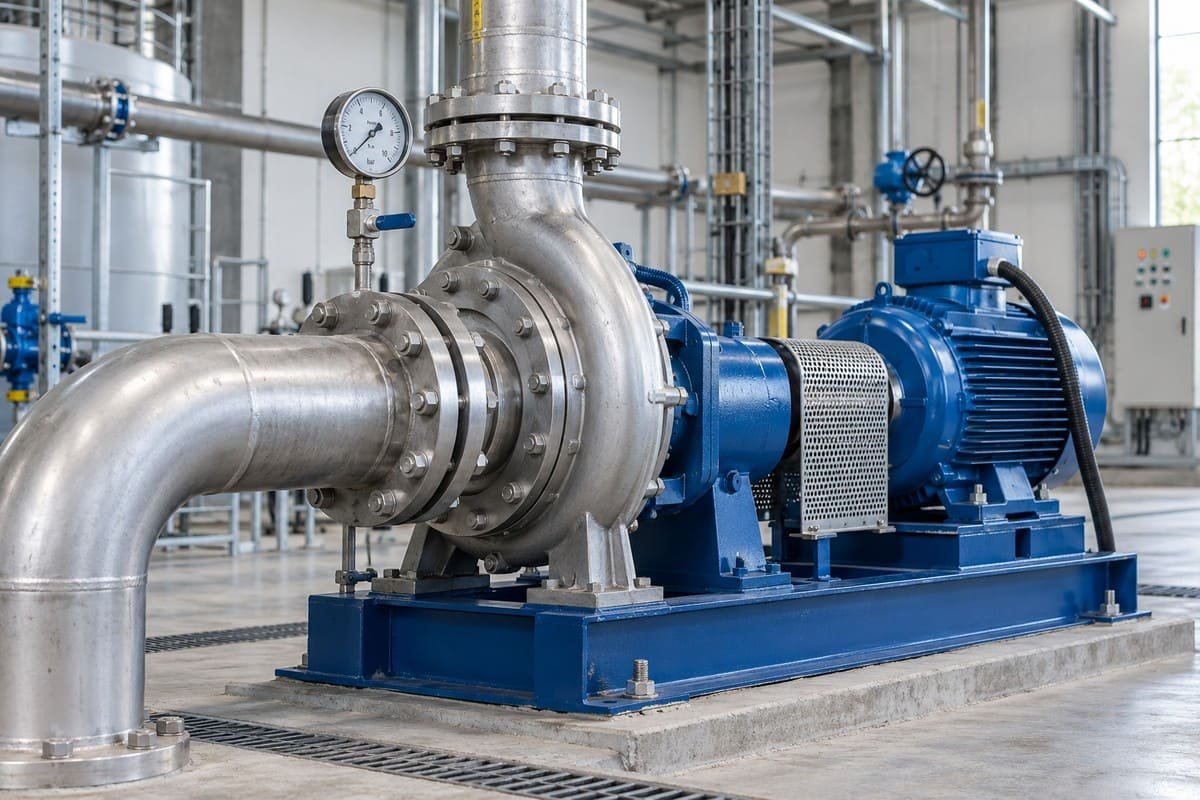
Vertical pumps save floor space; horizontal pumps are easier to service; submersible pumps sit in the liquid. Check the access for maintenance.
7. How will it run?
Continuous or occasional duty, one pump or a duty and standby pair, fixed or variable speed. The answers affect the motor, the controls and the number of pumps.
Use the CNP Pump Finder
Enter your flow and head in the Pump Finder, choose your supply frequency, and the tool lists the models from the CNP catalogue that cover the duty, best fit first. You can compare candidate models side by side, open the curve and datasheet of each, and download a selection report to share with your team.
The final choice should always be confirmed against your liquid and site conditions; our engineers are happy to check it.
Frequently asked questions
What if my duty point is between two pumps?
Choose the smaller pump if it still reaches your head at the flow you need, since it will run closer to its best efficiency point. Our engineers can check the curves for you.
Should I add a safety margin to flow and head?
A small margin is sensible, but large margins lead to oversized pumps that waste energy. Calculate carefully instead.
Can I get a datasheet for the pump I choose?
Yes. Each model page on this site has a datasheet and selection report you can download.
Talk to CNP Pumps Pakistan
Open the Pump Finder, browse the full catalogue, or talk to our engineers.

Comments
No comments yet. Be the first to write one.