
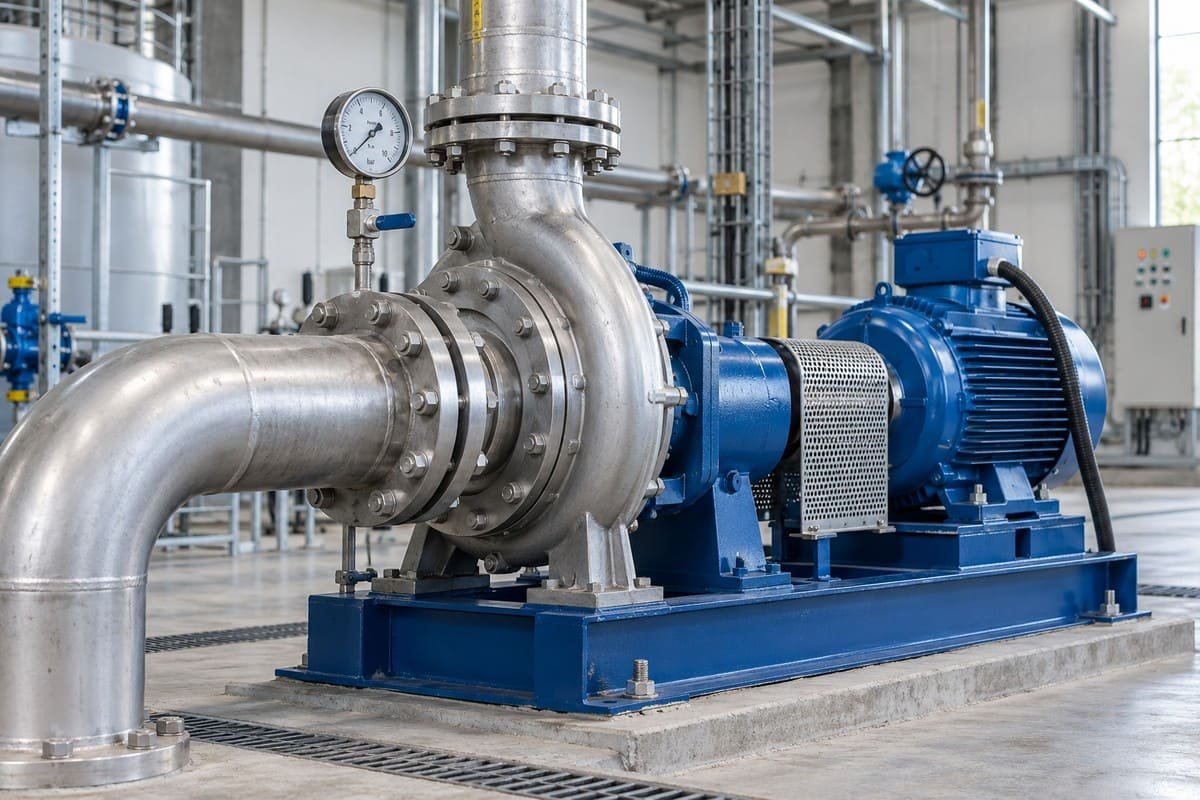
If a pump rattles as if it were pumping gravel, loses flow or wears out its impeller early, cavitation is the usual cause. It is easy to prevent once you understand NPSH, the margin between the suction pressure you have and the pressure the pump needs.
What is cavitation?
When the pressure at the pump inlet falls below the vapour pressure of the liquid, small vapour bubbles form. As they move into higher pressure inside the impeller they collapse violently. The tiny shock waves pit the metal, make a crackling noise, cause vibration and reduce flow and head.
NPSHa and NPSHr
NPSHr (required) comes from the pump curve. It is the suction head the pump needs at a given flow to avoid cavitation. NPSHa (available) is what your system provides. As a rule, NPSHa must be larger than NPSHr, with a margin of at least 0.5 to 1 m, and more for hot liquids or critical duty.
NPSHa is the atmospheric pressure at the liquid surface, plus or minus the static height between the liquid and the pump, minus the friction loss in the suction pipe, minus the vapour pressure of the liquid. All terms are expressed in metres of liquid.

What reduces NPSHa
- A suction lift (liquid level below the pump).
- Long, narrow or restricted suction pipes, closed valves or blocked strainers.
- Hot liquids, because vapour pressure rises with temperature.
- High altitude, where atmospheric pressure is lower.
- Running the pump at a flow much higher than its rating.
Warning signs
Crackling or gravel-like noise, vibration, fluctuating pressure, falling flow and pitted impellers. If you hear it, act quickly: continued cavitation destroys impellers and seals.
How to fix it
Raise the liquid level or lower the pump, enlarge the suction pipe, shorten it, remove unnecessary bends, clean the strainer, cool the liquid or choose a pump with a lower NPSHr at your duty. Throttling the discharge to reduce the flow also lowers NPSHr.
Frequently asked questions
What is a safe NPSH margin?
At least 0.5 to 1 m above NPSHr for cold clean water, and more for hot, volatile or critical services.
Can I fix cavitation by throttling the suction valve?
No. Throttling the suction makes it worse. Throttle the discharge instead, or fix the suction conditions.
Does cavitation affect all pumps?
Any centrifugal pump can cavitate. Pumps that take liquid from below their own level or handle hot liquids are most at risk.
Talk to CNP Pumps Pakistan
Model pages show the NPSH data where it is published. Compare candidates in the Pump Finder or ask our engineers to check your suction conditions.


Comments
No comments yet. Be the first to write one.